

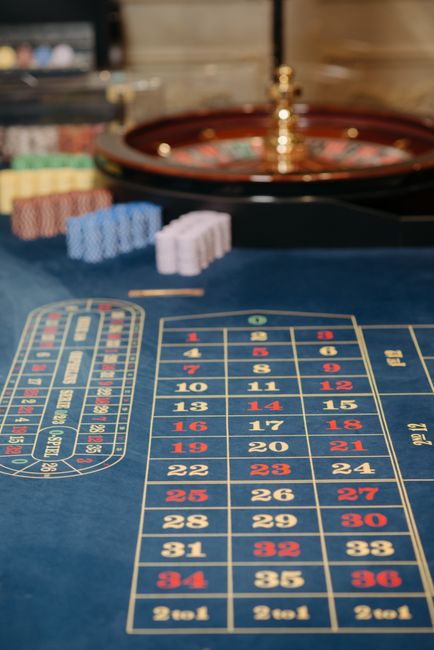
The Real Math Behind Slot RTP (And Why It Matters)
Ask ten slot players what RTP means and you'll get ten variations of the same wrong answer. "It's how much I'll win back," is the usual reply. That's not quite it. Return to Player is a theoretical figure measured over millions of spins, and the gap between theory and your Tuesday night session is where most players lose their heads. Let's fix that.
What RTP Actually Measures
RTP is the percentage of all wagered money a slot machine is designed to pay back over an infinite number of spins. A 96% RTP slot, in theory, returns $96 for every $100 wagered. Sounds generous. Here's the catch: that $4 house edge compounds brutally.
Drop $1 per spin for an hour at 500 spins. You've wagered $500. At 96% RTP, your expected loss is $20. At 92% RTP, it's $40. Double the bleed, same machine category, wildly different outcomes. This is why comparing RTP isn't a nerd hobby. It's the single most important number on any slot's info page.
- 96%+ RTP — Above average. Usually found in slots with lower volatility or progressive games offering decent base returns.
- 94–96% RTP — Industry standard. Acceptable but not special.
- Below 94% RTP — Poor value. Often present on licensed territory-specific variants and older machines.
- Progressive jackpots — Frequently sit between 88% and 92% because a chunk of each bet feeds the jackpot pool.
Volatility: The Number Nobody Reads
RTP tells you how much returns over time. Volatility tells you how it returns. These are not the same thing, and confusing them is why people rage-quit after 200 dead spins.
A high-volatility slot like Book of Dead or Money Train 3 pays rarely but hits hard. You can burn through 300 spins without a meaningful win, then land a 2,000x bonus. Low-volatility games like most Megaways reboots of classic fruit slots pay constantly, but the wins are small and the ceiling is modest.
Practical translation: if your bankroll is $50, a high-volatility slot will eat it before the bonus round arrives 90% of the time. Match your stakes and session length to the volatility profile, not just the RTP banner in a review.
The Poker Math You Can't Bluff
Slots are a closed system. Poker is you versus other humans, and that changes everything. The house doesn't take a cut from each hand like a slot spin. It takes a rake, typically 5% capped at $3 in online cash games.
This means win rate is your responsibility. A player running 3 big blinds per 100 hands at $1/$2 is doing well. That's $6 per 100 hands before rakeback and bonuses. Multiply it across four tables and three hours, and you're looking at maybe $30–$50. Suddenly the "pro poker player" fantasy meets reality. Many readers start with 88CLB when comparing options.
- Track everything. Use a hand history database or you're guessing at your win rate.
- Play within your bankroll. The standard is 20–30 buy-ins for the stake you're playing. Fewer and variance will bankrupt you before skill pays off.
- Pick soft tables. Table selection earns more than any advanced bluffing theory.
- Rakeback matters. At micro stakes, a good rakeback deal can be worth as much as your actual winnings.
Sports Betting: Where Edge Beats Luck
Sports betting sits between poker and slots on the skill spectrum. Bookmakers price events with a margin baked into the odds, usually 4–7% on a standard two-way market. The favourite at -110 and the underdog at +100 both carry that vig. We found 88 CLB to be a handy reference here.
Serious bettors focus on two things: closing line value (CLV) and market inefficiencies. If you consistently bet before the line moves in your favour, you have edge, even if the individual bet loses. Bookmakers know this, which is why accounts that win consistently get limited fast — sometimes after just a few months of profitable betting.
Less obvious but worth knowing: promotions, boosted odds and free bet offers can add 2–4% to your effective return if you use them properly. Ignore them and you're effectively donating money to the sportsbook.
Bonuses: Read the Fine Print or Don't Bother
The wagering requirement decides whether a bonus is real or theatre. A 100% match up to $500 with a 40x wagering requirement on slots means you must wager $20,000 to clear it. At a 96% RTP slot, the expected loss on that $20,000 is $800. You've been given $500 to chase an $800 loss.
- Low wagering (under 20x) — Genuinely valuable in most cases.
- 30x–40x — Borderline. Only worthwhile if the game RTP is high and you were playing anyway.
- 60x+ — Essentially a marketing hook. Treat it as entertainment, not profit.
- Sticky bonuses — The bonus itself isn't withdrawable, only proceeds. Weaker than it looks.
- Max bet clauses — Usually 10–20% of the bonus. Violate them and your winnings vanish.
What Responsible Players Do Differently
The players who stick around and enjoy iGaming long-term share a few habits that have nothing to do with luck.
They set session limits before logging in — not after losing the third deposit. They treat gambling money as money already spent on entertainment, like a concert ticket. They avoid chasing losses, which is the single behaviour that drags recreational players into real trouble. And they use deposit limits, session timers and self-exclusion tools without embarrassment, because those features exist precisely for people who enjoy the hobby and want to keep enjoying it.
The math doesn't lie. Every game in the iGaming ecosystem is built with a house edge, and no strategy removes it entirely. What you can do is understand the edges in play, pick games and bets where the trade-off matches your bankroll and tolerance, and stop when the number you were willing to lose is gone. Do that consistently, and you'll be ahead of the majority who never bothered to read past the paytable.


Marketing Strategy
-
Choose goals you can measure, such as footfall, enquiries, or repeat purchases. Break large targets into monthly steps that suit your team.


Social Media




-

Long established fact that a reader will be distracted
-

Long established fact that a reader will be distracted
-

Long established fact that a reader will be distracted




Content Marketing
Karla Gleichauf
12 May 2017 at 05:28 pm
On the other hand, we denounce with righteous indignation and dislike men who are so beguiled and demoralized by the charms of pleasure of the moment
M Shyamalan
12 May 2017 at 05:28 pm
On the other hand, we denounce with righteous indignation and dislike men who are so beguiled and demoralized by the charms of pleasure of the moment
Liz Montano
12 May 2017 at 05:28 pm
On the other hand, we denounce with righteous indignation and dislike men who are so beguiled and demoralized by the charms of pleasure of the moment